.webp)
.webp)
%2B(7).webp)
.png)
A PCOS grocery list should focus on three goals: stabilizing blood sugar, reducing inflammation, and supporting hormone balance. Stock up on leafy greens, berries, fatty fish, legumes, whole grains, nuts, seeds, and anti-inflammatory spices like cinnamon and turmeric. Pair every meal and snack with protein, fiber, and healthy fat to blunt insulin spikes. No single food fixes PCOS, but consistent, informed choices at the grocery store add up to meaningful symptom relief.
Most women searching for a PCOS grocery list have already been diagnosed. They know something about insulin resistance, maybe about inflammation. What they want is a clear, organized reference they can actually bring to the store, one that explains not just what to buy but why it belongs in the cart.
That is what this guide provides.
PCOS affects between 5% and 26% of reproductive-aged women worldwide, making it the most common endocrine disorder in this population (NCBI StatPearls). In the United States alone, roughly 5 million women are affected, with annual healthcare costs estimated at $4 billion. Up to 70% of women with PCOS show signs of insulin resistance, and that number climbs to 75% in lean women and 95% in those with obesity.
The good news: lifestyle modifications, especially diet, are the primary and most effective management approach for PCOS. Even a modest 5% reduction in body weight can restore fertility and improve metabolic markers (NCBI StatPearls).
This glossary is organized in two parts. First, the key nutritional terms you will see repeated in PCOS nutrition advice, defined in plain language and connected to specific grocery decisions. Second, a complete PCOS grocery list organized by store aisle. If you want to put this knowledge into practice with a structured eating plan, check out our 7-day high-protein PCOS diet plan.
Note: This is general guidance. A registered dietitian can personalize recommendations based on your labs and symptoms. If you have PCOS and want individualized support, learn about Vedic’s PCOS nutrition counseling, which is covered by most major insurance plans.
Key Terms to Know Before You Shop
Understanding a handful of nutritional concepts transforms a PCOS grocery list from a set of random instructions into a strategy you actually understand. These are the terms that come up again and again.
Androgens
Androgens are hormones like testosterone and DHEA-S. Everyone produces them, but women with PCOS often produce too much, which drives symptoms like acne, excess hair growth, and hair thinning. Diet affects androgen levels directly. High-fiber and low-glycemic-index diets have been shown to reduce free androgen index (FAI) while increasing sex hormone-binding globulin, the protein that mops up excess androgens (Zhang et al., Frontiers in Nutrition, 2025).
Shopping connection: Foods that lower insulin (whole grains, legumes, non-starchy vegetables) tend to lower androgens too, because insulin signals the ovaries to produce more testosterone.
Anti-Inflammatory Foods
Chronic low-grade inflammation is common in PCOS and worsens insulin resistance. Anti-inflammatory foods contain compounds (antioxidants, polyphenols, omega-3 fatty acids) that counteract this process. Think colorful produce, fatty fish, olive oil, nuts, seeds, and spices like turmeric and ginger.
A Mediterranean-style diet, which centers these foods, has been shown to lower inflammatory markers in women with PCOS (Biomedicines, 2021). Stress can amplify inflammation too, which is why practitioners on Reddit frequently recommend pairing dietary changes with stress management. If you are curious about the stress-weight connection, read about cortisol and belly fat.
Blood Sugar (Blood Glucose)
Blood sugar is the amount of glucose circulating in your bloodstream at any given time. When it spikes rapidly after eating (typically from refined carbs eaten alone), your pancreas floods the system with insulin to bring it down. In PCOS, cells are often resistant to insulin’s signal, so the body produces even more. This cycle drives weight gain, cravings, fatigue, and hormonal disruption.
Shopping connection: Every item on a PCOS grocery list should be evaluated through this lens. Does it spike blood sugar fast, or does it release glucose slowly? Pairing foods (protein + fiber + fat at every meal) slows glucose absorption and flattens the curve.
Cruciferous Vegetables
Broccoli, cauliflower, Brussels sprouts, kale, cabbage, and bok choy. These vegetables contain a compound called indole-3-carbinol (I3C), which supports healthy estrogen metabolism. For women with PCOS, where estrogen and androgen balance is already disrupted, cruciferous vegetables offer a targeted nutritional advantage beyond general “eat your veggies” advice.
Glycemic Index (GI)
The glycemic index ranks carbohydrate-containing foods on a scale of 0 to 100 based on how quickly they raise blood sugar. Low-GI foods (55 or below) release glucose slowly. High-GI foods (70+) cause rapid spikes.
Here is an example that matters at the store: steel-cut oats have a GI of about 42, while instant oats clock in around 79. Same grain, very different blood sugar response. Low-GI diets have been shown to reduce fasting insulin and improve menstrual regularity in women with PCOS.
Glycemic Load (GL)
Glycemic load takes the GI concept further by accounting for portion size. Watermelon has a high GI (around 72) but a low glycemic load because a typical serving contains relatively little carbohydrate. GL gives a more accurate picture of a food’s real-world impact on blood sugar. When building your PCOS grocery list, think about both what you eat and how much of it you eat at once.
Insulin Resistance
Insulin resistance means your cells do not respond efficiently to insulin, so your pancreas produces more and more to compensate. This is the metabolic engine behind most PCOS symptoms. Elevated insulin increases androgen production, promotes fat storage (especially around the abdomen), and makes weight loss harder.
The encouraging finding: a 2025 meta-analysis confirmed that high-fiber and low-GI diets significantly reduced fasting glucose and insulin resistance in women with PCOS (Zhang et al., Frontiers in Nutrition, 2025). For a deeper look at resetting metabolic function, see our metabolic reset guide.
Omega-3 Fatty Acids
Omega-3s are polyunsaturated fats found in fatty fish (salmon, sardines, mackerel), walnuts, chia seeds, and flax seeds. They reduce inflammation, may help modulate androgen levels, and improve insulin sensitivity. Most Americans do not eat enough of them.
SHBG (Sex Hormone-Binding Globulin)
SHBG is a protein produced by the liver that binds to testosterone and estrogen, keeping free (active) hormone levels in check. Women with PCOS often have low SHBG, meaning more free testosterone circulates and causes symptoms. Research shows that high-fiber and low-GI diets increase SHBG and reduce free androgen index (Zhang et al., Frontiers in Nutrition, 2025).
Shopping connection: Every time you choose a whole grain over a refined one, or add lentils to a meal, you are nudging your SHBG in the right direction.
Whole Foods / Minimally Processed Foods
Foods that are close to their natural state, with few or no added ingredients. A sweet potato is a whole food. A bag of sweet potato chips with 15 ingredients is not. The Mediterranean diet, which consistently shows benefits for PCOS, is built around minimally processed foods: vegetables, fruits, whole grains, legumes, fish, olive oil, nuts.
Your PCOS Grocery List by Aisle
This section organizes a complete PCOS-friendly grocery list the way you actually walk through a store. For each category, the focus is on foods that stabilize blood sugar, reduce inflammation, and support hormonal balance.
Produce: Vegetables
Leafy greens: Spinach, kale, Swiss chard, arugula, collard greens. Rich in magnesium (which many women with PCOS are deficient in), folate, and fiber. Virtually no impact on blood sugar.
Cruciferous vegetables: Broccoli, cauliflower, Brussels sprouts, cabbage, bok choy. Support estrogen metabolism, high in fiber and vitamin C.
Non-starchy vegetables: Bell peppers, zucchini, tomatoes, cucumbers, asparagus, mushrooms, green beans, celery. These should form the bulk of your plate. Low calorie, high nutrient density, minimal blood sugar impact.
Starchy vegetables (in moderation): Sweet potatoes, beets, winter squash (butternut, acorn). These are nutritious but contain more carbohydrate. Pair them with protein and fat, and keep portions to about a fist-size serving.
Cultural staples worth adding: Nopales (prickly pear cactus pads) are high in fiber and have been studied for blood sugar-lowering effects. Jícama is crunchy, refreshing, and low-GI. Chayote is a mild, versatile squash common in Mexican cuisine. If these are available at your store, they belong on a PCOS grocery list just as much as broccoli.
Produce: Fruits
Berries: Blueberries, strawberries, raspberries, blackberries. Highest antioxidant value among common fruits, relatively low in sugar, high in fiber. A half-cup serving is an ideal addition to yogurt, oats, or a smoothie.
Other low-GI fruits: Apples, pears, cherries, grapefruit, kiwi, peaches, plums. These release sugar more gradually than tropical fruits.
Tropical fruits: Mango, papaya, pineapple. These are not off-limits. They contain valuable vitamins and enzymes. Eat them in smaller portions and pair with a protein source (like a handful of nuts or Greek yogurt) to slow sugar absorption.
Meat and Seafood
Fatty fish: Salmon, sardines, mackerel, trout. Aim for at least two servings per week. These are the richest dietary sources of omega-3 fatty acids, which combat inflammation and may improve insulin sensitivity.
Lean poultry: Chicken breast, turkey. Affordable, versatile, high in protein. Understanding why protein matters so much for appetite and weight management can help you prioritize it at every meal.
Eggs: Whole eggs, including the yolk. The yolk contains choline (important for liver health) and vitamin D (commonly low in PCOS). Two eggs provide about 12 grams of protein.
Lean beef and pork: Fine in moderation. Choose cuts labeled “loin” or “round” for less saturated fat. Grass-fed options offer a slightly better omega-3 to omega-6 ratio.
Plant-Based Protein
Lentils, chickpeas, black beans, kidney beans, edamame, tofu, tempeh. These foods pull double duty: high in both protein and fiber. A cup of cooked lentils delivers about 18 grams of protein and 15 grams of fiber. For women with PCOS targeting 25 to 30 grams of fiber per day (the range supported by current research), legumes are one of the fastest ways to get there.
Dairy and Alternatives
Greek yogurt: Higher in protein than regular yogurt (15 to 20 grams per serving), plus probiotics for gut health. Choose plain and add your own berries or a drizzle of honey.
Kefir: A fermented milk drink with diverse probiotic strains. Gut microbiome health is an emerging area of PCOS research.
The dairy debate: You do not need to quit dairy because of PCOS. Dairy provides calcium, vitamin D, and protein. Some research has actually linked low-fat dairy to increased androgen production, which is the opposite of what most people assume. Full-fat dairy in reasonable portions may be the better choice. If you prefer plant-based options, unsweetened soy milk is the closest nutritional match to cow’s milk, with unsweetened almond and oat milk as alternatives (though lower in protein).
Grains and Bread Aisle
Whole grains to stock: Quinoa, steel-cut oats, brown rice, farro, barley, buckwheat. These are high in fiber and have a lower glycemic index than their refined counterparts.
Bread and pasta: Look for “whole grain” as the first ingredient on the label. Sprouted grain breads (like Ezekiel) are another solid option. Whole wheat pasta is a simple swap.
What to limit: White bread, instant rice, sugary breakfast cereals, flavored instant oatmeal packets. These spike blood sugar quickly and offer little fiber. This does not mean you can never eat them. It means they should not be staples.
Nuts, Seeds, and Healthy Fats
Walnuts: One of the best plant sources of omega-3s. Research has shown walnuts may lower androgens in women with PCOS.
Almonds: High in magnesium and vitamin E.
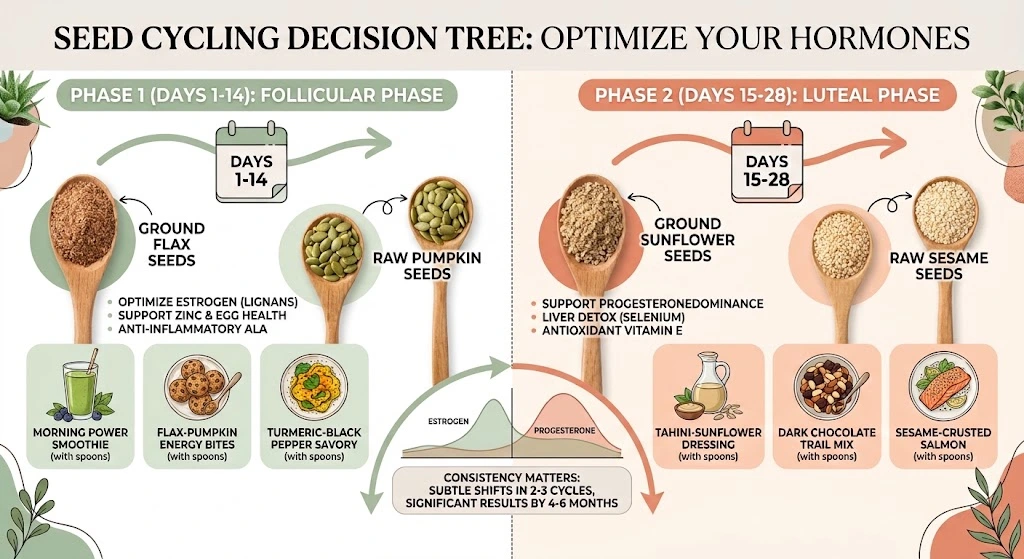
Pumpkin seeds (pepitas): Rich in zinc, which plays a role in hormone regulation. A staple in many Latin American diets, and a great addition to any PCOS grocery list.
Chia seeds, flax seeds, hemp hearts: Chia and flax are high in fiber and omega-3s. Ground flax is easier for the body to absorb. Hemp hearts add protein.
Olive oil and avocado oil: Primary cooking fats. Both are rich in monounsaturated fatty acids, which support heart health and reduce inflammation.
Nut butters: Almond butter, peanut butter, cashew butter. Check labels: the ingredient list should be nuts (and maybe salt). Avoid versions with added sugar or hydrogenated oils.
Spices, Herbs, and Drinks
Cinnamon: Has insulin-sensitizing properties. A half-teaspoon to one teaspoon per day, added to oatmeal, yogurt, or coffee, is a simple habit. Ceylon cinnamon is preferred over cassia for regular daily use.
Turmeric: Contains curcumin, a potent anti-inflammatory compound. Pair with black pepper to increase absorption.
Ginger: Anti-inflammatory and helpful for digestion.
Spearmint tea: This one surprises people. Spearmint has anti-androgen properties. Two cups per day for five days has been shown to reduce free testosterone in preliminary studies. Several PCOS community members on Reddit report noticeable improvements in hormonal acne and facial hair after consistent spearmint tea consumption.
Green tea: Contains catechins that may improve insulin sensitivity and support modest fat loss.
Hibiscus tea (agua de jamaica): Popular in Latin American households, naturally caffeine-free, and rich in antioxidants. A cultural staple that fits perfectly into a PCOS-friendly drink rotation, especially when prepared without added sugar or with minimal sweetener.
Frozen and Canned Aisle
Frozen produce is nutritionally equivalent to fresh, and sometimes superior, because it is flash-frozen at peak ripeness (Journal of Food Composition and Analysis, 2017). This matters for budget-conscious shopping.
Frozen berries: Often half the price of fresh. Perfect for smoothies and oatmeal.
Frozen vegetables: Broccoli, spinach, cauliflower rice, stir-fry blends. No washing, no chopping, no waste.
Canned beans: Black beans, chickpeas, kidney beans. Look for low-sodium versions, or rinse regular canned beans under water for 30 seconds to reduce sodium by about 40%.
Canned fish: Sardines and canned salmon are affordable omega-3 sources. Sardines in olive oil are particularly nutrient-dense (calcium, vitamin D, omega-3s all in one can).
Foods to Limit (Not Eliminate)
A PCOS grocery list is as much about what you buy less of as what you add. The goal is not perfection or deprivation. It is shifting the ratio.
Refined carbohydrates: White bread, pastries, sugary cereals, white pasta. These convert to glucose quickly and drive insulin spikes.
Sugary drinks: Soda, fruit juice, sweetened iced tea, flavored coffee drinks. Liquid sugar hits the bloodstream faster than any other form of carbohydrate. One 20-ounce soda contains roughly 65 grams of sugar.
Highly processed snacks: Packaged cookies, chips, candy bars, most granola bars. Check ingredient lists. If sugar (or its aliases: high fructose corn syrup, dextrose, maltose) is in the first three ingredients, put it back.
Excess saturated and trans fats: Fried foods, processed meats (hot dogs, bacon, sausage), packaged baked goods with partially hydrogenated oils.
The framing matters here. Practitioners and dietitians working with PCOS patients consistently push back against all-or-nothing thinking. A restrictive mindset often backfires, leading to binge-restrict cycles that worsen both metabolic health and mental well-being. Think of it as “eat less often” rather than “never eat.” If you are working toward weight loss alongside PCOS management, sustainable changes beat dramatic restriction every time.
PCOS Shopping Tips That Actually Help
Use the plate-pairing rule. Every meal and snack should combine three things: protein, fiber, and healthy fat. This trio slows glucose absorption, keeps you full longer, and prevents the insulin spikes that worsen PCOS symptoms. For example, an apple alone spikes blood sugar more than an apple with almond butter. A bowl of rice alone spikes more than rice with chicken and roasted vegetables.
Read the first three ingredients. Ingredient lists are ordered by weight. If sugar, enriched flour, or a vegetable oil is one of the first three ingredients, the product is not a good fit for a PCOS pantry.
Buy frozen without guilt. Frozen fruits and vegetables are picked and processed at peak nutrition. They last weeks, reduce food waste, and cost 30 to 50% less than fresh in many cases.
Stock legumes in bulk. Dried lentils, black beans, and chickpeas cost a fraction of canned versions and store for months. A one-pound bag of dried lentils costs about $1.50 and yields roughly six cups cooked.
Plan loosely. You do not need to plan seven dinners a week. Aim for three or four planned meals. Use leftovers creatively. Batch-cook grains and proteins on the weekend.
Store brands are the same quality. For whole grains, frozen vegetables, canned beans, and olive oil, store-brand versions are virtually identical to name brands. The savings add up.
A Note on GLP-1 Medications and Your PCOS Grocery List
Women with PCOS who are taking GLP-1 medications like semaglutide (Wegovy) or tirzepatide (Zepbound) face a specific nutritional challenge: these medications reduce appetite significantly, which can lead to inadequate protein intake and muscle loss if not managed carefully.
If you are on a GLP-1 medication, your PCOS grocery list should be even more protein-forward. Aim for 1.2 to 1.6 grams of protein per kilogram of body weight daily. Prioritize eggs, Greek yogurt, fish, poultry, and legumes at every meal. A registered dietitian who understands both PCOS and GLP-1 pharmacology can help you structure your shopping and meals to preserve lean mass while managing PCOS symptoms. Vedic’s team offers GLP-1 companion nutrition support designed for exactly this situation.
Why a Grocery List Is Just the Starting Point
A PCOS grocery list gives you structure. But PCOS is not one-size-fits-all. Two women with the same diagnosis can have very different lab profiles, symptoms, and responses to food.
A registered dietitian can review your fasting insulin, hemoglobin A1c, androgen levels, and SHBG to determine which foods on this list deserve the most emphasis for your body. They can also help you navigate specific challenges like emotional eating, meal timing around exercise, or managing PCOS during pregnancy.
Vedic Nutrition’s team of 18+ registered dietitian nutritionists includes CDCES-certified specialists and bilingual practitioners who offer personalized PCOS nutrition counseling via telehealth. Most clients pay $0 out of pocket with insurance coverage. You can meet the dietitian team and get started here.
Frequently Asked Questions
What is the best diet for PCOS?
No single named diet is “best.” Research supports a Mediterranean-style eating pattern (rich in vegetables, whole grains, legumes, fish, olive oil) and low-glycemic-index approaches. A 2025 meta-analysis found that both high-fiber and low-GI diets significantly reduced insulin resistance, triglycerides, and free androgen index in women with PCOS. The best diet is one that stabilizes blood sugar, reduces inflammation, includes adequate protein and fiber, and is sustainable for your life.
Are carbs bad for PCOS?
No. Your body and brain depend on glucose for energy, and carbohydrates are a primary fuel source. The issue is not carbohydrates as a category but the type and context. Whole grains, legumes, fruits, and starchy vegetables are all carbohydrates that belong on a PCOS grocery list. What to minimize: refined carbs eaten in isolation without protein or fat.
Can I eat dairy with PCOS?
Yes, unless you have a specific intolerance. Dairy provides calcium, vitamin D, and protein. Interestingly, some research links low-fat dairy to increased androgen production, so full-fat dairy in moderate amounts may be a better choice for women with PCOS. Greek yogurt and kefir offer the added benefit of probiotics.
How much protein do I need with PCOS?
A reasonable target for most women with PCOS is 1.2 to 1.6 grams of protein per kilogram of body weight per day. For a 160-pound (73 kg) woman, that is roughly 88 to 117 grams daily. Women on GLP-1 medications should aim for the higher end to protect muscle mass. Distributing protein evenly across meals (25 to 35 grams per meal) is more effective than loading it all into dinner.
Is keto good for PCOS?
Ketogenic diets may produce short-term weight loss, but the evidence for long-term PCOS management is limited. Keto eliminates entire food groups (most fruits, legumes, many whole grains) that provide fiber and micronutrients beneficial for PCOS. It is also difficult to sustain, and many women report hormonal disruptions with very-low-carb diets. A moderate, low-GI approach tends to be more effective and sustainable.
What fruits are best for PCOS?
Berries (blueberries, strawberries, raspberries, blackberries) top the list due to their high antioxidant content and lower sugar load. Apples, pears, cherries, kiwi, and grapefruit are also good low-GI options. Tropical fruits like mango and pineapple are fine in moderation when paired with protein or fat.
Does a PCOS grocery list change if I’m on a GLP-1 medication?
The core foods stay the same, but the emphasis shifts toward protein. GLP-1 medications suppress appetite, which can lead to eating too little protein and losing muscle mass. Prioritize high-protein foods (eggs, Greek yogurt, fish, poultry, legumes) and consider tracking protein intake to ensure you are hitting 1.2 to 1.6 grams per kilogram daily. A dietitian experienced with both PCOS and GLP-1 nutrition support can tailor your shopping list accordingly.
How much fiber should I eat per day with PCOS?
Research supports aiming for 25 to 30 grams of fiber per day. A 2025 meta-analysis found that high-fiber diets significantly reduced fasting glucose, insulin resistance, triglycerides, and LDL cholesterol while increasing SHBG in women with PCOS. To put that in perspective: one cup of lentils has about 15 grams of fiber, a cup of raspberries has 8 grams, and a cup of cooked broccoli has about 5 grams. Most American women currently eat only 12 to 15 grams per day, so even small increases help.
For more PCOS nutrition resources, visit our PCOS article library.
.svg)
.svg)

.webp)
.webp)
.webp)
.webp)
.webp)
.webp)
.png)
.webp)