.webp)
%2B(7).webp)
.png)
At a Glance
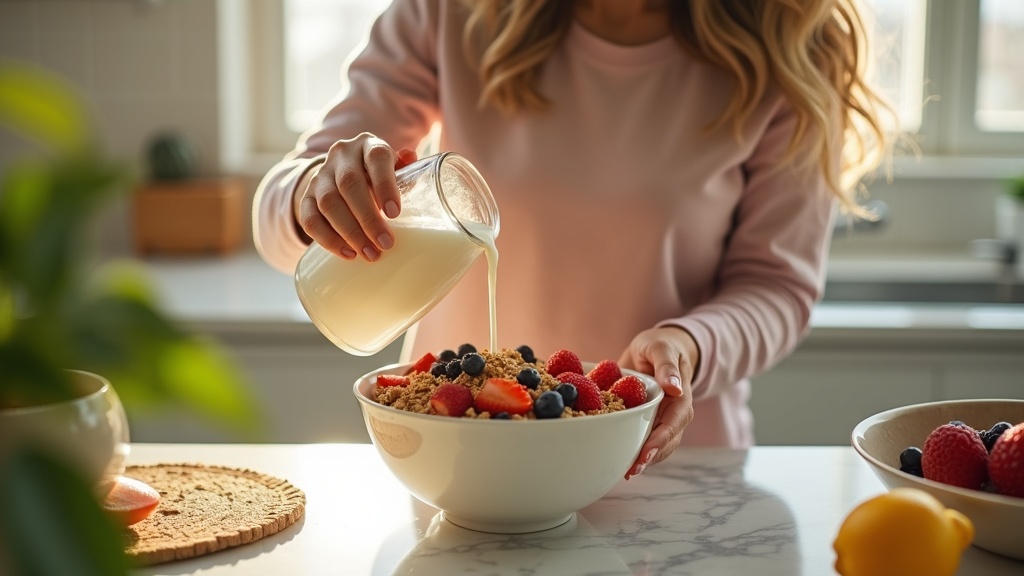
High protein meal planning for satiety means building every meal around 25 to 40 grams of protein so your body’s fullness hormones stay active between meals, cutting hunger without cutting calories. This guide gives you a ready-to-use 7-day meal plan, simple recipes, a printable grocery list, and per-meal protein targets. It also covers specific plans for GLP-1 medication users and PCOS management. If you want a registered dietitian to personalize this further, Vedic Nutrition’s RDNs build insurance-covered plans (95% of clients pay $0 out of pocket) tailored to your labs, conditions, and food preferences.
Most people searching for high protein meal planning for satiety don’t need another science lecture. They need a plan they can grocery shop for on Sunday and follow all week. That’s what this guide delivers.
The science is straightforward: your body needs at least 30 grams of protein per meal to trigger the hormones (GLP-1, PYY, CCK) that keep you full for hours. Below that threshold, the fullness effect barely registers. Pair that protein with fiber and food volume (vegetables, legumes, whole grains), and you activate every satiety pathway your body has.
The rest is execution. Here’s how to do it.
Your Quick-Start Protein Targets
Before jumping into the meal plan, here are the numbers that matter:
- Protein (per meal): 30–40 g
- Protein (per day): 1.2–1.6 g/kg body weight (for a 155 lb person: ~85–115 g/day)
- Fiber (per meal): 8–10 g
- Fiber (per day): 30+ g
The biggest mistake most people make? Back-loading all their protein at dinner. A 10-gram protein breakfast, a 15-gram lunch, and a 60-gram dinner means you only hit the fullness threshold once per day. You spend the morning and afternoon fighting hunger for no reason.
The fix is simple: spread protein evenly across three meals (and one optional snack).
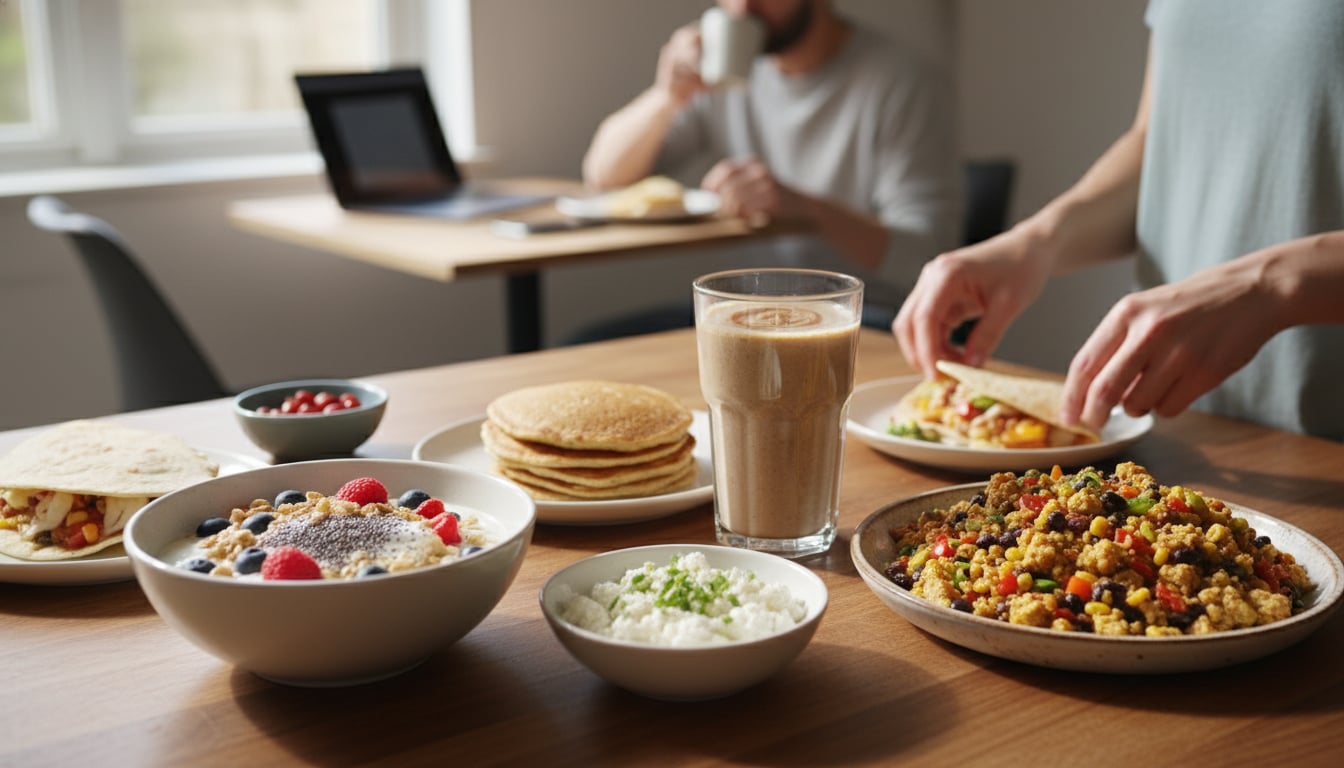
7-Day High Protein Meal Plan for Satiety
Each day hits 100 to 120 grams of protein, with 30+ grams at every meal. Fiber targets and estimated calories are included. All meals are designed around whole foods you can find at any Texas grocery store.
Day 1
Breakfast: Greek Yogurt Power Bowl (32g protein)
- 1 cup plain nonfat Greek yogurt (20g protein)
- 2 tbsp hemp seeds (7g protein)
- ½ cup mixed berries
- 1 tbsp chia seeds (3g protein)
- Sprinkle of cinnamon
Lunch: Turkey and Black Bean Lettuce Wraps (35g protein)
- 4 oz ground turkey, seasoned with cumin and chili powder (28g protein)
- ½ cup black beans (7g protein)
- Romaine lettuce cups
- Diced tomato, red onion, cilantro
- Squeeze of lime, hot sauce
Dinner: Sheet Pan Chicken Thighs with Roasted Vegetables (38g protein)
- 5 oz boneless skinless chicken thighs (33g protein)
- 2 cups broccoli and bell peppers, tossed in olive oil
- ½ cup cooked quinoa (5g protein)
- Season with garlic, paprika, salt, pepper
Snack: Hard-Boiled Eggs and Veggies (12g protein)
- 2 hard-boiled eggs
- Celery sticks, baby carrots
Day total: ~117g protein, ~35g fiber
Day 2
Breakfast: Veggie Egg Scramble (31g protein)
- 3 whole eggs + 2 egg whites (25g protein)
- ½ cup black beans (7g protein)
- Handful of spinach, diced bell pepper
- Salsa and 1 corn tortilla
Lunch: Tuna Salad over Greens (34g protein)
- 1 can (5 oz) tuna in water (30g protein)
- Mixed greens, cucumber, cherry tomatoes
- 2 tbsp hummus (2g protein)
- Lemon-olive oil dressing
- 1 slice whole grain bread (2g protein)
Dinner: Beef and Vegetable Stir-Fry (36g protein)
- 5 oz lean sirloin, sliced thin (36g protein)
- Stir-fry with snap peas, mushrooms, zucchini, garlic
- Serve over ½ cup brown rice
- Low-sodium soy sauce and ginger
Snack: Cottage Cheese with Pineapple (14g protein)
- ½ cup low-fat cottage cheese
- ¼ cup pineapple chunks
Day total: ~115g protein, ~32g fiber
Day 3
Breakfast: Overnight Protein Oats (33g protein)
- ½ cup rolled oats (5g protein)
- 1 scoop whey or plant protein powder (25g protein)
- 1 tbsp peanut butter (4g protein)
- ½ cup unsweetened almond milk
- Mix the night before, top with sliced banana in the morning
Lunch: Chicken and Lentil Soup (35g protein)
- 4 oz shredded chicken breast (28g protein)
- ½ cup cooked lentils (9g protein)
- Diced carrots, celery, onion in chicken broth
- Season with cumin, garlic, bay leaf
- Side of whole grain crackers
Dinner: Baked Salmon with Sweet Potato and Asparagus (38g protein)
- 6 oz salmon fillet (38g protein)
- 1 medium sweet potato, cubed and roasted
- 1 cup asparagus, roasted with olive oil and lemon
Snack: Turkey Roll-Ups (10g protein)
- 3 slices deli turkey
- Mustard, wrapped around pickle spears
Day total: ~116g protein, ~34g fiber
Day 4
Breakfast: Breakfast Burrito (34g protein)
- 2 whole eggs + 2 egg whites (19g protein)
- 2 oz turkey sausage (10g protein)
- ½ cup pinto beans (5g protein)
- Whole wheat tortilla, salsa, spinach
Lunch: Shrimp and Avocado Bowl (32g protein)
- 5 oz grilled shrimp (30g protein)
- ½ avocado, sliced
- ½ cup edamame (5g protein)
- Mixed greens, cherry tomatoes, cucumber
- Lime-cilantro dressing
Dinner: Turkey Meatballs with Marinara and Zucchini Noodles (36g protein)
- 5 oz lean ground turkey, formed into meatballs (32g protein)
- Marinara sauce (look for low-sugar)
- 2 cups spiralized zucchini
- Side: ¼ cup white beans in the sauce (4g protein)
Snack: String Cheese and Apple (7g protein)
- 1 string cheese stick
- 1 medium apple
Day total: ~109g protein, ~36g fiber
Day 5
Breakfast: Smoothie Bowl (done right) (30g protein)
- 1 scoop protein powder (25g protein)
- ½ cup frozen cauliflower rice (adds volume, no taste)
- ½ cup frozen berries
- 1 tbsp almond butter (3g protein)
- Small handful of granola on top (2g protein)
- Eat with a spoon, not a straw (chewing matters for fullness)
Lunch: Chicken Caesar Salad, Hold the Croutons (37g protein)
- 5 oz grilled chicken breast (35g protein)
- Romaine lettuce, shaved parmesan (2g protein)
- Light Caesar dressing
- Side of ½ cup chickpeas for fiber
Dinner: Pork Tenderloin with Black-Eyed Peas and Collard Greens (35g protein)
- 5 oz pork tenderloin (30g protein)
- ½ cup black-eyed peas (5g protein)
- 2 cups collard greens, sautéed with garlic
Snack: Edamame (9g protein)
- ½ cup shelled edamame, sprinkled with sea salt
Day total: ~111g protein, ~33g fiber
Day 6
Breakfast: Cottage Cheese Pancakes (30g protein)
- 1 cup low-fat cottage cheese (24g protein)
- 2 eggs (12g protein), blended with ½ cup oats
- Cook like regular pancakes
- Top with fresh berries (skip syrup)
Lunch: Bean and Cheese Quesadilla with Chicken (33g protein)
- 3 oz shredded chicken (21g protein)
- ½ cup refried beans (6g protein)
- ¼ cup shredded cheese (6g protein)
- Whole wheat tortilla
- Side of pico de gallo and mixed greens
Dinner: Cod with Roasted Brussels Sprouts and Farro (35g protein)
- 6 oz cod fillet (30g protein)
- 1.5 cups Brussels sprouts, halved and roasted
- ½ cup cooked farro (5g protein)
- Lemon-herb seasoning
Snack: Protein Yogurt Cup (12g protein)
- ¾ cup plain Greek yogurt with a drizzle of honey
Day total: ~110g protein, ~31g fiber
Day 7
Breakfast: Huevos Rancheros (33g protein)
- 3 eggs, fried or poached (18g protein)
- ½ cup black beans (7g protein)
- 2 corn tortillas
- Salsa roja, diced avocado, cilantro
- Side: ¼ cup queso fresco (8g protein)
Lunch: Leftover Salmon Bowl (34g protein)
- 4 oz leftover salmon (25g protein)
- ½ cup brown rice
- 1 cup roasted vegetables (whatever you have)
- ½ cup edamame (5g protein)
- Drizzle of soy sauce and sesame oil
Dinner: Slow Cooker Chicken Tinga (36g protein)
- 5 oz shredded chicken thigh (33g protein)
- Canned fire-roasted tomatoes, chipotle in adobo, onion, garlic
- Serve over ½ cup pinto beans (3g protein)
- Side of shredded cabbage and lime
Snack: Peanut Butter Celery (8g protein)
- 2 tbsp peanut butter on celery sticks
Day total: ~111g protein, ~35g fiber
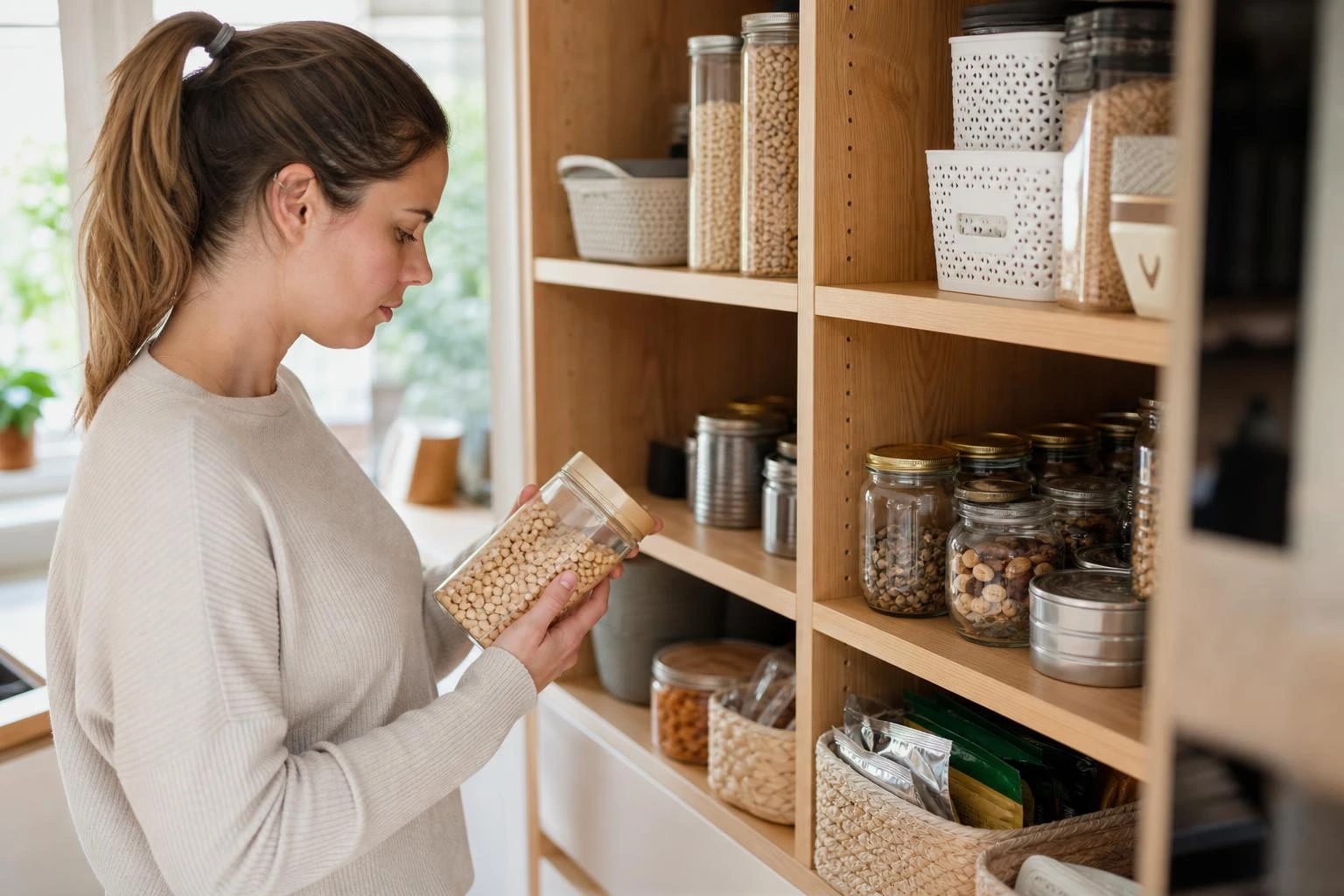
Grocery List for the Full Week
Print this or screenshot it before you shop.
Proteins
- 1.5 lbs boneless skinless chicken thighs
- 1 lb chicken breast
- 1 lb lean ground turkey
- 2 oz turkey sausage
- 5 oz lean sirloin
- 5 oz pork tenderloin
- 12 oz salmon (2 fillets)
- 6 oz cod
- 5 oz shrimp
- 1 can (5 oz) tuna in water
- 1 package deli turkey slices
- 2 dozen eggs
- 1 large container plain nonfat Greek yogurt (32 oz)
- 1 container low-fat cottage cheese (16 oz)
- String cheese (1 pack)
- Shredded cheese (small bag)
- Queso fresco (small block)
- Whey or plant protein powder (1 container)
- Parmesan cheese (small block or pre-shaved)
Beans and Legumes
- 2 cans black beans
- 1 can pinto beans
- 1 can refried beans
- 1 can white beans (cannellini)
- 1 bag dried lentils (or 2 cans)
- 1 can black-eyed peas
- 1 can chickpeas
- 1 bag frozen shelled edamame
Grains and Starches
- Rolled oats
- Brown rice
- Quinoa
- Farro
- Whole wheat tortillas
- Corn tortillas
- Whole grain bread
- Whole grain crackers
- Small bag granola (low sugar)
Vegetables
- Broccoli (2 heads)
- Bell peppers (4, mixed colors)
- Spinach (1 large bag)
- Romaine lettuce (2 heads)
- Mixed greens (1 container)
- Zucchini (3)
- Brussels sprouts (1 lb)
- Asparagus (1 bunch)
- Collard greens (1 bunch)
- Snap peas (1 bag)
- Mushrooms (8 oz)
- Cherry tomatoes (1 pint)
- Carrots (1 bag baby carrots + regular carrots)
- Celery (1 bunch)
- Cucumber (2)
- Red onion (2)
- Yellow onion (2)
- Garlic (1 head)
- Sweet potato (1 medium)
- Avocados (2)
- Frozen cauliflower rice (1 bag)
- Cabbage (small head)
- Pickles (1 jar)
Fruits
- Berries, fresh or frozen (2 cups)
- Bananas (2)
- Apples (1)
- Pineapple chunks (small can or fresh)
- Limes (3)
- Lemons (2)
Pantry and Condiments
- Olive oil
- Low-sodium soy sauce
- Sesame oil
- Peanut butter
- Almond butter
- Hemp seeds
- Chia seeds
- Hummus (1 container)
- Salsa (1 jar)
- Pico de gallo
- Marinara sauce (low sugar)
- Canned fire-roasted tomatoes
- Chipotle peppers in adobo (small can)
- Chicken broth (32 oz)
- Honey
- Mustard
- Hot sauce
- Cumin, chili powder, paprika, cinnamon, garlic powder, bay leaves
Dairy / Milk
- Unsweetened almond milk (small carton)
3 Quick High-Protein Recipes You’ll Actually Make
1. Five-Minute Egg and Bean Breakfast (31g protein)
This is the single fastest way to hit 30+ grams of protein at breakfast.
Ingredients: 3 eggs, ½ cup canned black beans (rinsed), handful of spinach, salsa, 1 corn tortilla.
Directions: Scramble the eggs with spinach in a nonstick pan. Warm the beans in the microwave for 45 seconds. Pile eggs and beans onto the tortilla, top with salsa. Done.
Why it works for satiety: you get protein from the eggs and beans, fiber from the beans and spinach, and volume from the vegetables. That combination activates your fullness hormones and your stomach’s stretch receptors at the same time.
2. Sheet Pan Chicken and Vegetables (38g protein)
The workhorse dinner. Make a double batch and you have lunch protein for two days.
Ingredients: 5 oz boneless skinless chicken thighs, 2 cups mixed vegetables (broccoli, bell pepper, zucchini), 1 tbsp olive oil, garlic, paprika, salt, pepper.
Directions: Preheat oven to 425°F. Toss chicken and vegetables with olive oil and seasonings on a sheet pan. Roast for 22 to 25 minutes until chicken reaches 165°F. Serve over ½ cup quinoa or brown rice.
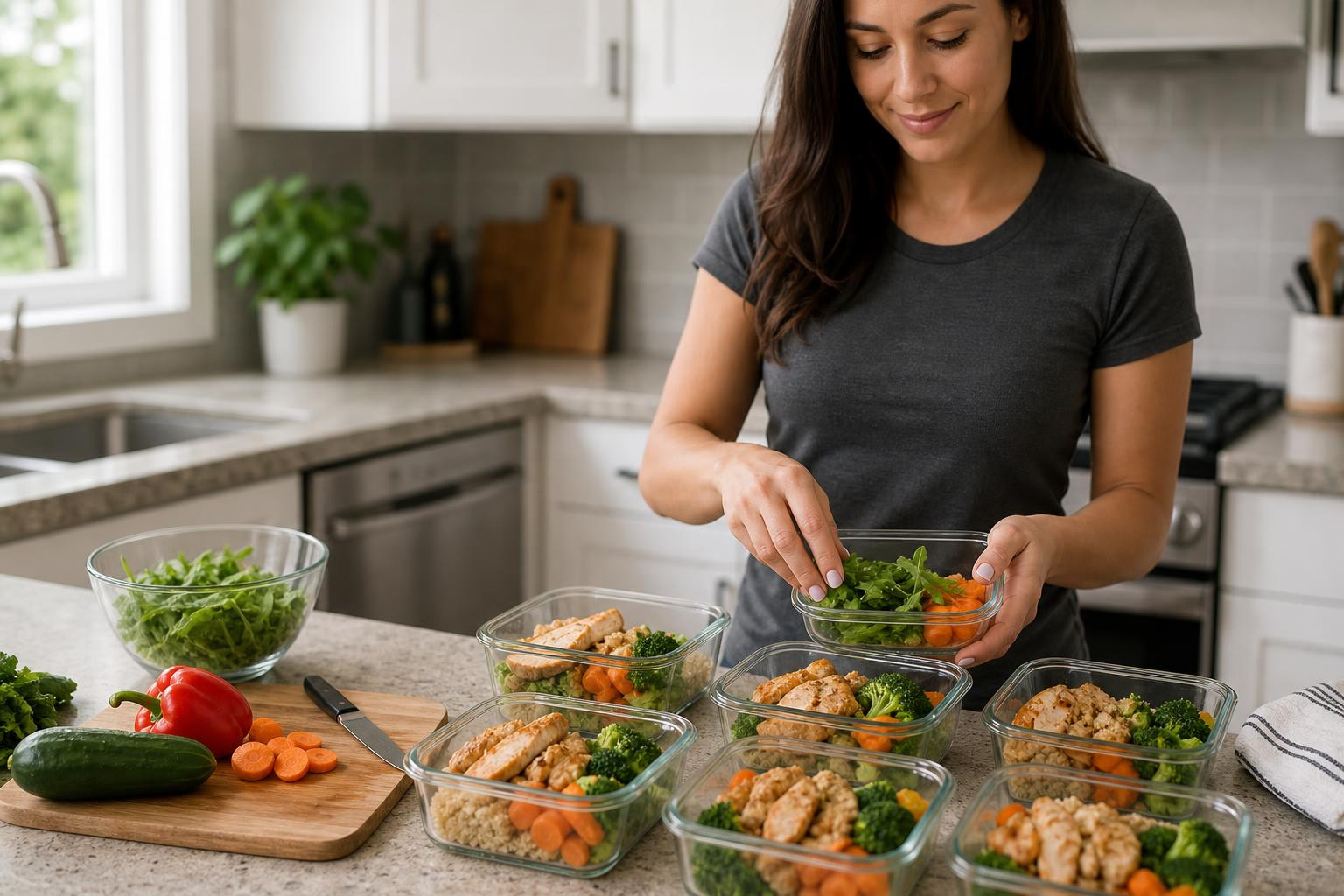
Batch cooking tip: Double the chicken. Shred leftovers for tomorrow’s salad or lunch bowl.
3. Slow Cooker Chicken Tinga (33g protein per serving)
Set it in the morning, eat it for dinner. Feeds four.
Ingredients: 1.5 lbs boneless skinless chicken thighs, 1 can fire-roasted tomatoes, 1 to 2 chipotle peppers in adobo (chopped), 1 diced onion, 3 cloves garlic (minced), 1 tsp cumin, salt.
Directions: Put everything in a slow cooker. Cook on low for 6 to 8 hours. Shred chicken with two forks. Serve over pinto beans with shredded cabbage, lime, and corn tortillas.
Leftover moves: Use the chicken in breakfast burritos, quesadillas, or over salad greens for lunch.
Why This Works: The Science in Plain Language
You don’t need a biology degree. Here’s the short version.
Your body has fullness hormones. When protein-rich food hits your gut, it triggers the release of GLP-1, PYY, and CCK, three hormones that tell your brain to stop eating and stay full. At the same time, protein suppresses ghrelin, the hormone that makes you hungry. This hormonal response doesn’t kick in reliably until you hit about 30 grams of protein per meal.
Protein costs more energy to digest. Your body burns 20 to 30% of protein’s calories just processing it, compared to 5 to 10% for carbs and 0 to 3% for fat. This is called the thermic effect of food. It means a higher-protein diet effectively reduces net calories even when total intake stays the same.
Your body won’t stop asking for protein until it gets enough. This is called the Protein Leverage Hypothesis, developed by researchers at the University of Sydney. If your meals are low in protein, your appetite stays elevated until protein needs are met, even if you’ve already eaten plenty of calories from carbs and fat. In one study, when researchers bumped protein from 15% to 30% of calories, participants spontaneously ate 441 fewer calories per day. Nobody told them to eat less. Their appetite just quieted down.
Protein alone isn’t always enough. Practitioners on Reddit (r/loseit, r/MacroFactor) report a recurring frustration: eating 120+ grams of protein per day while still feeling hungry. The common thread is low fiber, not enough food volume, or poor meal timing. That’s why every meal in the plan above pairs protein with vegetables and fiber-rich foods like beans, lentils, and whole grains. You want to activate multiple fullness pathways at once.
The 2025-2030 Dietary Guidelines for Americans reflect this evidence, recommending 1.2 to 1.6 grams of protein per kilogram of body weight daily. This is higher than the older RDA of 0.8 g/kg, which was a minimum to prevent deficiency, not an optimum for satiety.
For a deeper dive into building a high-protein diet, that guide covers the foundations. If you’ve been struggling with overeating, the protein leverage hypothesis offers a concrete, testable explanation.
Meal Plan for GLP-1 Medication Users (Wegovy, Zepbound)
This is one of the most important applications of high protein meal planning for satiety, and one of the least discussed. If GLP-1 medications suppress your appetite so well, why does protein planning matter more, not less?
Because appetite suppression makes eating enough protein genuinely difficult. Without intentional planning, you won’t eat enough. And without adequate protein (plus resistance training), up to 40% of weight lost on GLP-1 medications can be muscle. That drives metabolic adaptation and makes weight regain more likely after stopping the medication.
A 2025 joint advisory from four professional societies recommended 1.2 to 1.6 g/kg of protein daily during active weight loss on GLP-1 medications.
Sample GLP-1 Day (small, protein-dense meals)
Appetite is often lowest in the morning and after dosing, so this plan uses smaller, more frequent meals with protein-dense choices.
Meal 1 (morning, small): Cottage Cheese and Berries (24g protein)
- 1 cup low-fat cottage cheese, ½ cup berries, 1 tbsp chia seeds
Meal 2 (late morning): Turkey and Cheese Roll-Ups (22g protein)
- 4 slices deli turkey, 1 string cheese, handful of grape tomatoes
Meal 3 (afternoon): Chicken and Lentil Soup (32g protein)
- 4 oz shredded chicken in broth with ½ cup lentils, carrots, celery
- Broth-based soups work well when nausea limits solid food tolerance
Meal 4 (evening): Baked Salmon with Roasted Vegetables (34g protein)
- 5 oz salmon, 1.5 cups roasted broccoli and sweet potato
Key strategies:
- Eat protein first at every meal, before vegetables or starches
- Choose protein-dense foods over high-volume, low-calorie options when appetite is minimal
- Solid food generally produces stronger fullness signals than shakes (chewing and stomach stretch matter)
- If you need liquid protein due to nausea, add chia seeds or oats for texture and eat a small solid food alongside
One point practitioners emphasize in online discussions: protein shakes can bypass the chewing and stretch receptor activation that solid food provides. If shakes are necessary, treat them as a supplement, not a replacement.
For more on structuring meals around these medications, this guide on GLP-1 support meals covers protein and fiber pairing strategies. Vedic’s registered dietitians specialize in building protein-forward plans for GLP-1 users, informed by labs and adjusted to medication side effects.
Meal Plan Adjustments for PCOS and Insulin Resistance
Protein plays a unique role for people managing polycystic ovary syndrome and insulin resistance. Protein doesn’t spike blood sugar on its own, and when eaten alongside carbohydrates, it slows their absorption into the bloodstream.
Research shows that a high-protein breakfast suppressed post-meal glucose levels after breakfast and 1.5 hours after lunch. This “second-meal effect” means protein at breakfast improves blood sugar control at the next meal too.
PCOS-Friendly Swaps for the 7-Day Plan
You can follow the same 7-day meal plan above with these adjustments:
- Swap refined grains for lower-glycemic options: Use quinoa, farro, or lentils in place of white rice. Stick with corn or whole wheat tortillas.
- Add cinnamon to breakfast bowls and oats. Small thing, but research supports modest blood sugar benefits.
- Keep carbs paired with protein at every meal. Never eat carbs alone. The bean and egg breakfast is ideal because the protein and fiber buffer the carb response.
- Prioritize the high-protein breakfast. This is the single highest-impact change for blood sugar stability throughout the day.
- Include anti-inflammatory foods: The salmon dinners, leafy greens, and berries in the plan already cover this.
For women with PCOS specifically, higher protein diets can help decrease abdominal fat by increasing satiety and post-meal energy expenditure. High protein meal planning for satiety addresses multiple PCOS concerns simultaneously: blood sugar stability, reduced cravings, and improved body composition.
This 7-day PCOS diet plan goes deeper with PCOS-specific meals and portion guidance.
Common Mistakes to Avoid
Back-loading all protein at dinner. A 10-gram protein breakfast and a 60-gram protein dinner means you only trigger the fullness response once. You spend the first two-thirds of the day fighting hunger unnecessarily.
Relying on protein shakes as your main strategy. Shakes have a role when appetite is low or time is short. But solid food outperforms liquid protein for satiety in both controlled studies and real-world experience. The physical act of chewing and the stomach stretch from solid food volume contribute meaningfully to fullness.
Ignoring fiber and volume. A protein bar with 30 grams of protein but 2 grams of fiber and minimal volume will not keep you as full as a plate of chicken, vegetables, and beans. The meal plans above pair all three because that’s what the research supports.
Choosing processed protein products loaded with sugar. Some protein bars and “high-protein” snacks contain 15 to 20 grams of added sugar. The blood sugar spike and crash can undermine the satiety you’re trying to build.
Not adjusting for medical conditions. People with chronic kidney disease need to work with a clinician before increasing protein intake. The general recommendation of 1.2 to 1.6 g/kg does not apply to everyone.
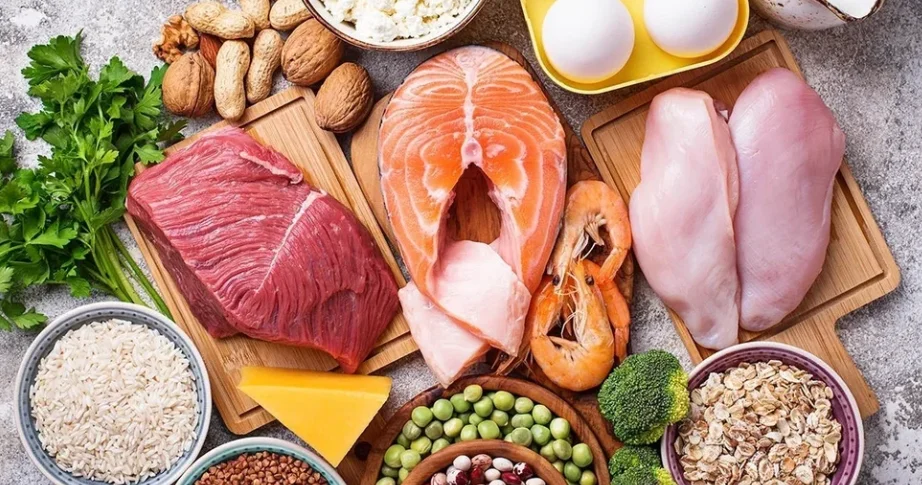
Protein Source Quick Reference
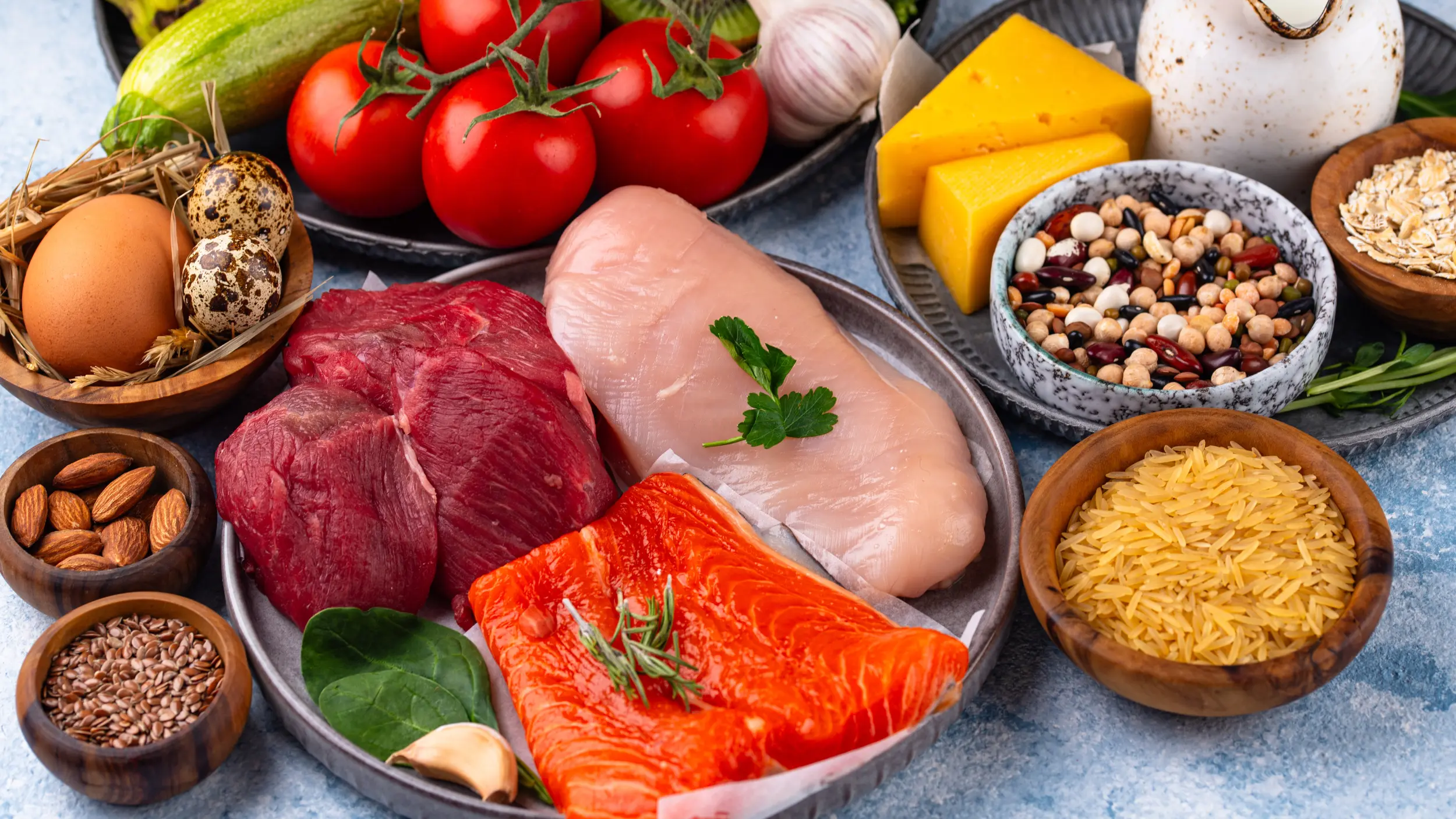
Not all protein triggers the same satiety response. Here’s a practical cheat sheet:
- Chicken breast — 5 oz cooked: 35 g protein
- Chicken thigh (boneless, skinless) — 5 oz cooked: 33 g protein
- Salmon — 5 oz cooked: 32 g protein
- Lean ground turkey — 5 oz cooked: 32 g protein
- Cod — 6 oz cooked: 30 g protein
- Shrimp — 5 oz cooked: 30 g protein
- Lean sirloin — 5 oz cooked: 36 g protein
- Pork tenderloin — 5 oz cooked: 30 g protein
- Eggs — 3 large: 18 g protein
- Greek yogurt (plain, nonfat) — 1 cup: 20 g protein
- Cottage cheese (low-fat) — 1 cup: 24 g protein
- Black beans — ½ cup cooked: 7 g protein
- Lentils — ½ cup cooked: 9 g protein
- Edamame — ½ cup shelled: 9 g protein
- Tofu (firm) — ½ cup: 10 g protein
- Whey protein powder — 1 scoop: 25 g protein
Solid foods consistently outperform liquid protein for satiety. Among protein powders, whey shows a slightly higher thermic effect (14.4%) compared to casein (12.0%) and soy (11.6%). Plant proteins work well for satiety when combined for adequate leucine, the amino acid most directly linked to fullness signaling and muscle preservation.
For specific food choices that hit the muscle-preserving and satiety threshold, this guide on protein sources for lean mass offers more options.
When to Work With a Registered Dietitian
A meal plan from the internet gets you started. But applying it to your specific situation is where things get complicated. A person managing PCOS, taking Wegovy, eating halal, and dealing with a soy allergy faces a very different planning problem than someone who just wants to lose ten pounds.
Registered dietitian nutritionists can review your labs, account for medications, respect cultural food preferences (including Latin, South Asian, and other traditional cuisines), and build a protein-forward plan that you’ll actually follow. The difference between knowing you need 30 grams of protein per meal and having a realistic weekly plan that fits your life is where most people get stuck.
Vedic’s RDNs build insurance-covered plans personalized to your labs, conditions, and preferences, with 95% of clients paying $0 out of pocket. Available statewide in Texas via telehealth, with bilingual (English/Spanish) dietitians on the team.
Frequently Asked Questions
How many grams of protein do I need per meal for satiety?
Research consistently points to a minimum of 25 to 30 grams per meal. Studies that included less than 25 grams per meal did not find a meaningful satiety effect. For most people, 30 to 40 grams per eating occasion across three to four meals is the practical target.
Is high protein meal planning for satiety safe for my kidneys?
For people with healthy kidneys, protein intakes of 1.2 to 1.6 g/kg per day are well-supported by research and reflected in the 2025-2030 Dietary Guidelines. People with existing kidney disease should not increase protein intake without guidance from a healthcare provider. Kidney function labs (GFR, creatinine) can help determine safe levels.
Does the type of protein matter for fullness?
Yes. Whole, solid protein sources (chicken, fish, eggs, legumes) generally produce stronger satiety than liquid sources like shakes. Plant proteins work well when paired with complementary sources. A chicken breast and a protein shake may contain the same grams of protein, but chewing, texture, and stomach distension from solid food activate fullness pathways that liquids partially bypass.
Why am I still hungry on a high-protein diet?
The most common reasons are low fiber intake, not enough food volume, or poor protein distribution across the day. If you’re eating most of your protein at dinner and barely any at breakfast, hunger will dominate your mornings and afternoons. Adding vegetables, legumes, and whole grains alongside your protein closes the gap.
How does high protein meal planning work with GLP-1 medications?
GLP-1 medications suppress appetite so effectively that many users struggle to eat enough protein, which can lead to significant muscle loss. A 2025 joint advisory recommends 1.2 to 1.6 g/kg of protein daily during active weight loss on these medications. Strategies include eating protein first at each meal, choosing protein-dense foods, and spreading intake across multiple small meals. See the GLP-1 meal plan section above for a ready-to-use daily template.
Can I get enough protein for satiety on a plant-based diet?
Yes, but it requires more planning. Legumes, tofu, tempeh, seitan, and combinations of grains with beans can reach the 30-gram threshold. Plant proteins tend to be lower in leucine, so variety matters. Many practitioners recommend including at least one leucine-rich plant source (soy or quinoa) at each meal.
Can I meal prep this plan?
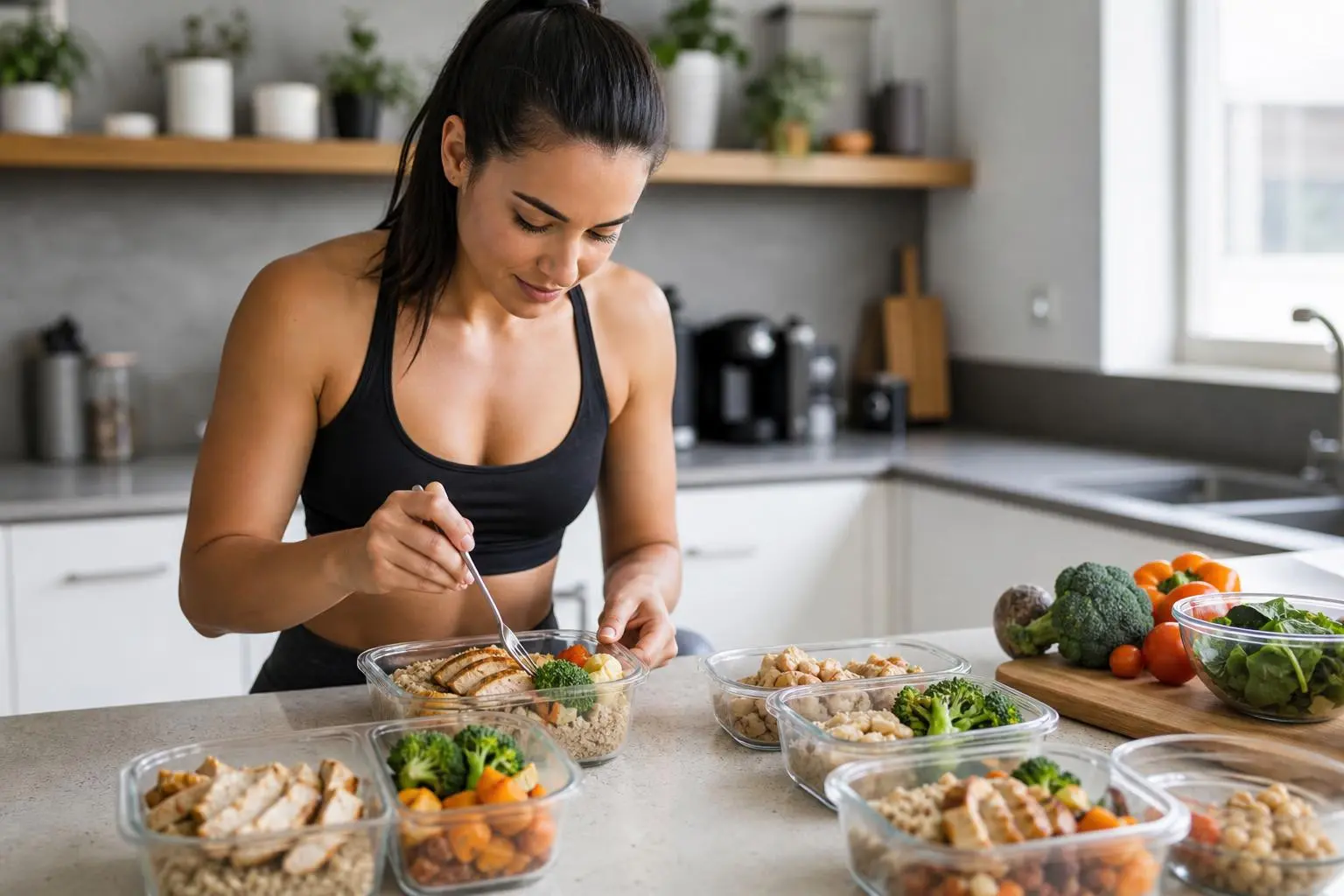
Absolutely. The sheet pan chicken (Day 1 and 3), slow cooker chicken tinga (Day 7), and lentil soup (Day 3) are all designed for batch cooking. Cook protein in bulk on Sunday, portion it out, and assemble meals throughout the week. Hard-boiled eggs last five days in the fridge. Cooked beans, rice, and quinoa all store well for three to four days.
What is the Protein Leverage Hypothesis?
It’s the theory that your body prioritizes protein intake above other macronutrients. If your meals are low in protein, your appetite stays elevated until protein needs are met, even if you’ve already consumed excess calories from carbs and fat. A hormone called FGF21 appears to drive this mechanism, rising when protein is insufficient and dropping once adequate protein arrives.
.svg)
.svg)










.webp)
.webp)
.webp)
.webp)
.webp)
.webp)
.webp)
.webp)
.webp)

.webp)
.webp)
.webp)
.webp)

.webp)