.webp)

%2B(7).webp)
.png)
If you have heart disease, focus on overall dietary patterns rather than obsessing over single nutrients. The 2026 AHA guidance identifies nine features of heart-healthy eating, with the DASH and Mediterranean diets having the strongest evidence. Your specific condition (coronary artery disease, heart failure, hypertension) changes the details, especially sodium limits. Working with a registered dietitian who can review your labs and tailor a plan to your diagnosis produces better outcomes than following generic food lists.
Roughly half of all adults in the United States have some form of cardiovascular disease. In 2023, someone died of cardiovascular disease every 34 seconds. These numbers are staggering, but they come with a hopeful counterpoint: up to 80% of heart disease and stroke may be preventable through healthy lifestyle choices, according to the American Heart Association.
Diet sits at the center of that prevention, and at the center of treatment too. If you’ve already been diagnosed, figuring out how to eat with heart disease is one of the most impactful things you can do. But the answer isn’t as simple as “eat more vegetables.” Your specific diagnosis, your lab results, and your daily life all shape what the right plan looks like.
This guide breaks down the dietary patterns, nutrient targets, and practical strategies backed by the most current evidence, including the 2026 AHA Dietary Guidance published in March 2026.
Check if your insurance covers a dietitian who can build a heart-specific nutrition plan for you.
The 2026 Shift: Patterns Over Single Nutrients
The most important update in the 2026 AHA scientific statement is a move away from fixating on individual nutrients and toward overall dietary patterns. Alice Lichtenstein, DSc, FAHA, one of the statement’s authors, emphasized that the guidance recommends people “focus on their overall eating pattern rather than specific nutrients or foods.”
This matters because it changes the question. Instead of asking “is butter bad?” or “should I take fish oil?”, the better question is: does your overall way of eating, day after day, support your heart? A single food rarely makes or breaks cardiovascular health. The cumulative pattern does.
For practical ideas on what this looks like at the start of your day, our guide to heart-healthy breakfast ideas puts this pattern-based thinking into action.
Types of Heart Disease That Change What You Eat
One of the biggest gaps in most heart diet advice is that it treats “heart disease” as one thing. It’s not. Your diagnosis directly shapes your dietary priorities.
Coronary Artery Disease (CAD)
CAD involves plaque buildup in the arteries that supply blood to the heart. Dietary priorities focus on lowering LDL cholesterol and reducing inflammation. Saturated fat, trans fat, and ultraprocessed foods are the primary targets for reduction. The Mediterranean diet shows particularly strong evidence here, with one 2024 study finding that following a Mediterranean-style diet could cut heart disease risk by almost half.
Congestive Heart Failure (CHF)
CHF means the heart can’t pump blood efficiently, leading to fluid retention. Sodium restriction is stricter than for other conditions: under 1,500 mg per day rather than the general 2,300 mg ceiling. Most heart failure-related hospital admissions are tied to fluid retention and high sodium intake. Your doctor may also recommend limiting total fluid intake, which includes anything liquid at room temperature (soups, gelatin, even ice cream).
Hypertension (High Blood Pressure)
The DASH diet was specifically designed for this condition by the National Heart, Lung, and Blood Institute. It emphasizes potassium, calcium, and magnesium while keeping sodium low. Research shows the DASH diet can reduce systolic blood pressure by 5 to 6 mmHg and diastolic by 3 mmHg.
High Cholesterol / Dyslipidemia
Dietary fiber (especially soluble fiber from oats, beans, and barley), plant sterols, and unsaturated fats are the primary tools. The Portfolio diet, which combines these elements, has strong evidence for lowering LDL. Saturated fat should stay below 10% of total calories.
Arrhythmia (Including Atrial Fibrillation)
Caffeine and alcohol are common triggers, and the 2026 AHA guidance now explicitly states: if you don’t drink alcohol, don’t start. Electrolyte balance (magnesium and potassium) also plays a role. People managing both diabetes and heart rhythm issues may also benefit from our diabetic-friendly snack guide to keep blood sugar stable between meals.
If you’ve been diagnosed with any of these, generic advice only goes so far. Your specific condition determines the details.
Heart-Healthy Dietary Patterns Defined
Rather than listing individual “superfoods,” the evidence points toward named dietary patterns that work as complete systems. Here are the four with the strongest cardiovascular evidence.
DASH Diet
What it is: Dietary Approaches to Stop Hypertension. High in fruits, vegetables, whole grains, lean protein, and low-fat dairy. Low in sodium, saturated fat, and added sugars.
Who it’s best for: People with hypertension or prehypertension. Now recommended as a first-line treatment for blood pressure reduction.
Key numbers: Reduces systolic BP by 5 to 6 mmHg, diastolic by 3 mmHg, and LDL cholesterol by 11 mg/dL.
Core focus nutrients: Potassium, calcium, magnesium.
Mediterranean Diet
What it is: Built around vegetables, fruits, whole grains, legumes, nuts, olive oil, and fish. Moderate amounts of poultry and dairy. Limited red meat.
Who it’s best for: Broad cardiovascular protection, especially for people with CAD or high cholesterol. The Mediterranean diet with added olive oil or supplemented with nuts showed the biggest decline in heart attacks and strokes in major clinical trials. It also lowered waist circumference, blood lipid levels, inflammation, and blood glucose.
Key evidence: A 2024 study found adherence to a Mediterranean-style diet could cut heart disease risk by almost half.
Portfolio Diet
What it is: A cholesterol-focused pattern that combines four specific food categories: plant sterols/stanols, soy protein, viscous fiber (oats, barley, psyllium), and nuts (especially almonds). It’s designed to mimic the LDL-lowering effect of statin medications through diet alone.
Who it’s best for: People whose primary concern is high LDL cholesterol.
Plant-Based Diet
What it is: Centers meals around vegetables, fruits, whole grains, legumes, nuts, and seeds. Can range from fully vegan to “plant-forward” with small amounts of animal protein.
Who it’s best for: People interested in the strongest evidence for cardiovascular risk reversal. Also aligns well with weight management goals.
For a deeper look at how these patterns fit within the broader 2025-2030 Dietary Guidelines, see our dietitian review.
Quick Comparison Table
The 9 Features of Heart-Healthy Eating (2026 AHA Guidance)
The AHA’s updated scientific statement organizes heart-healthy eating into nine features. Think of these as the principles that cut across all the named diets above. Regardless of which pattern you follow, these should hold true.
1. Balance Calories and Physical Activity
Achieving and maintaining a healthy body weight is foundational. This doesn’t mean crash dieting. It means matching energy intake to energy expenditure over time. For people managing weight alongside heart disease, a high-protein approach can help preserve muscle mass while losing fat.
2. Eat Plenty of Varied Fruits and Vegetables
Variety matters here because different colors provide different protective compounds. Leafy greens are particularly noteworthy: they’re rich in nitrates, which help relax and widen blood vessels. Research has found that people who ate the most nitrate-rich vegetables lowered their cardiovascular disease risk by 12% to 26%.
3. Choose Whole Grains Over Refined Grains
Whole grains retain their fiber, which helps lower cholesterol and improve blood sugar regulation. Oats, brown rice, quinoa, barley, and whole wheat are straightforward swaps for white bread, white rice, and refined pasta.
4. Choose Healthy Protein Sources
Fish, legumes, nuts, and poultry take priority over red and processed meats. Two to three servings of fatty fish per week is associated with lower incidence of cardiovascular disease, coronary heart disease, heart attack, stroke, and heart failure.
5. Replace Saturated Fats with Unsaturated Fats
Olive oil, avocado, nuts, and seeds over butter, lard, and coconut oil. In one study, eating at least two servings of avocado each week lowered the risk of coronary artery disease events by 21%. This isn’t about eliminating all fat. It’s about swapping the type.
6. Minimize Ultraprocessed Foods
This is a newer emphasis in the 2026 guidance. A 2021 study found that each daily serving of ultraprocessed food was associated with a 9% higher mortality. Ultraprocessed foods include packaged snacks, sugary cereals, instant noodles, and most fast food. They tend to be high in sodium, added sugar, and unhealthy fats simultaneously.
7. Limit Added Sugars
The target: less than 10% of total calories from added sugars. On a 2,000-calorie diet, that’s about 50 grams or 12 teaspoons. Sugary beverages are the single largest source for most Americans. Swapping soda and sweetened coffee drinks for water or unsweetened options can make a significant dent.
8. Reduce Sodium
This one deserves its own section (below), but the headline numbers: no more than 2,300 mg per day for general guidance, with an ideal limit of 1,500 mg for most adults with heart disease.
9. Don’t Start Drinking Alcohol; Limit If You Already Drink
This is a notable shift. Previous guidance was more ambiguous about moderate alcohol use. The 2026 AHA statement is now explicit: if you don’t drink, don’t start. If you do drink, limit intake. The earlier idea that red wine protects the heart has not held up under rigorous study.
Key Nutrient Targets: The Numbers That Matter
When people ask how they should eat with heart disease, they often want specific targets, not just food categories. Here are the numbers backed by current evidence.
Sodium
The gap between what most people eat (3,400 mg) and what people with heart disease should eat (1,500 mg) is enormous. Closing it requires actively reading labels and cooking differently, not just avoiding the salt shaker.
Saturated Fat
Keep below 10% of total daily calories. On a 2,000-calorie diet, that’s about 22 grams. Major sources include fatty cuts of meat, full-fat cheese, butter, and baked goods made with butter or palm oil.
Added Sugar
Less than 10% of total calories, which works out to roughly 50 grams (12 teaspoons) on a 2,000-calorie diet. Focus on beverages first, as they’re the biggest contributor for most people.
Fiber
Aim for 25 to 35 grams per day. Soluble fiber (oats, beans, lentils, apples, citrus) is particularly effective at lowering LDL cholesterol. Most Americans eat about 15 grams daily, so there’s usually significant room to increase.
Omega-3 Fatty Acids
Two to three servings of fatty fish per week (salmon, mackerel, sardines, trout) is the primary recommendation. Research indicates that both total omega-3 fatty acids and ALA (from plant sources like flaxseed and walnuts) are inversely linked to cardiovascular mortality in patients with CVD.
Supplements are more nuanced. High-dose EPA (4 grams per day of icosapent ethyl) has been shown to reduce major cardiovascular events in certain high-risk populations, but mixed EPA/DHA supplements have not consistently shown the same benefit. Talk to your cardiologist before starting high-dose fish oil.
Potassium, Calcium, and Magnesium
These are the minerals that make the DASH diet work for blood pressure. Good sources include bananas, sweet potatoes, spinach, yogurt, beans, and nuts. Rather than supplementing, focus on getting these through whole foods.
Foods to Prioritize and Foods to Limit
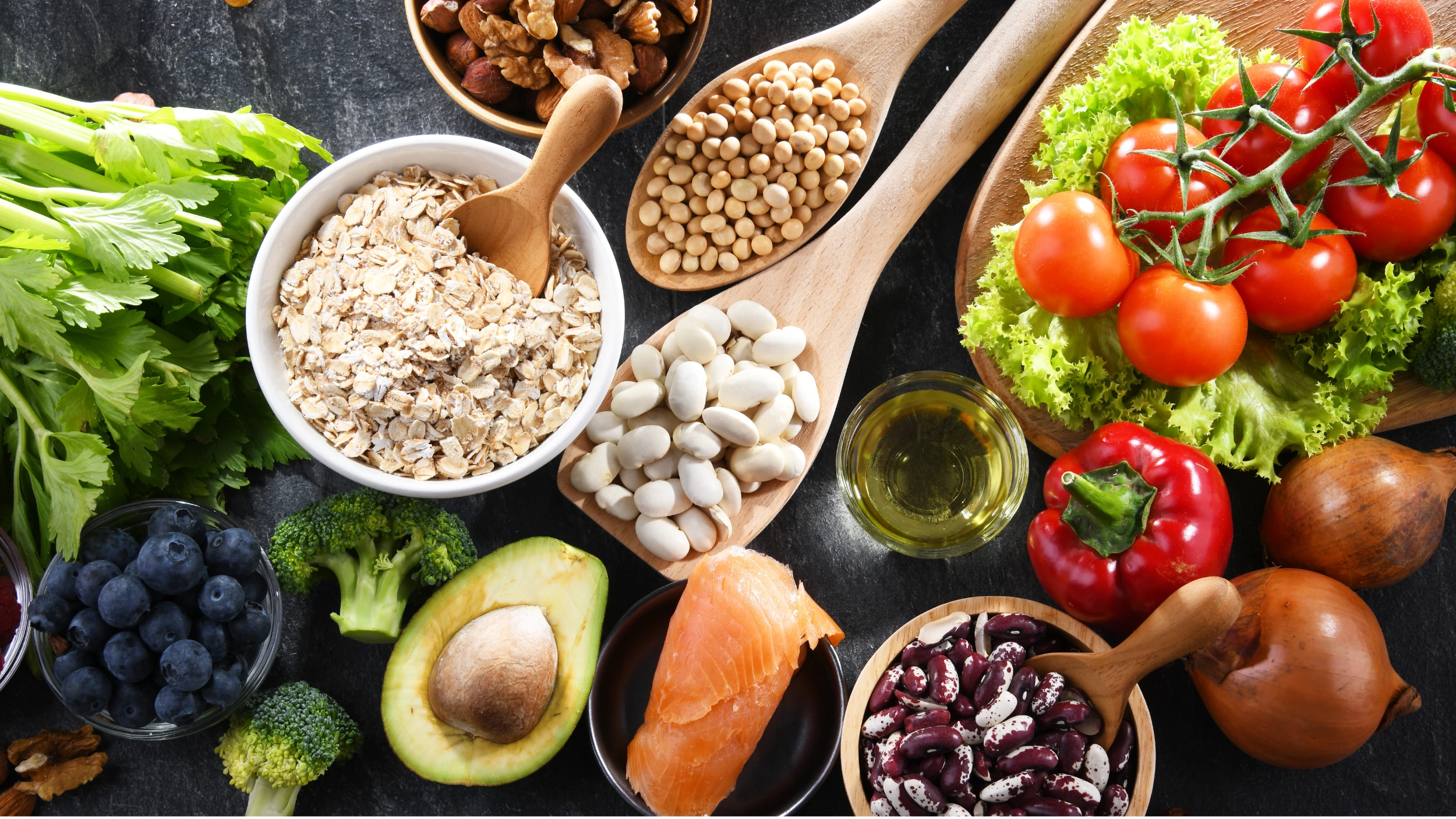
Foods to Build Your Meals Around
| Category | Examples | Why They Help |
|---|---|---|
| Leafy greens | Spinach, kale, arugula, Swiss chard | Rich in nitrates that widen blood vessels; lower CVD risk by 12–26% |
| Berries | Blueberries, strawberries, blackberries | High in anthocyanins that reduce inflammation and improve arterial function |
| Fatty fish | Salmon, mackerel, sardines, trout | Omega-3s linked to lower heart attack, stroke, and heart failure risk |
| Nuts and seeds | Almonds, walnuts, flaxseed, chia | Associated with lower risk of heart disease, CAD, and stroke |
| Legumes | Lentils, chickpeas, black beans, edamame | High in soluble fiber for cholesterol lowering; excellent plant protein |
| Whole grains | Oats, brown rice, quinoa, barley | Fiber supports cholesterol and blood sugar management |
| Olive oil | Extra virgin preferred | Central to Mediterranean diet; replaces saturated fat sources |
| Avocado |
.svg)
.svg)

.webp)

.webp)
.webp)